
About the Gurr Lab
Mission
Study cellular and molecular traits that regulate response to stimuli in mariculture models. Apply interventions on hatcheries and farms to improve resistance to current and impending challenges in our changing world.
Focus Areas
Hormesis
Cellular bioenergetics and cytology
Microbiome reprogramming
Predictive phenotyping and functional genomics
Epigenetics
Research Philosophy
Listen to farmers to understand their needs→ design testable mechanistic hypotheses → translate findings into testable interventions on site
This loop ensures our science is both fundamental and useful to the aquaculture community.
Impact
Our research strengthens the connection between scientific discovery and sustainable food systems. By revealing how shellfish adapt to stress at the cellular and molecular level, we help aquaculture industries anticipate change instead of reacting to it. The lab’s findings inform smarter hatchery practices, guide breeding programs, and support resilient coastal communities that depend on healthy oceans.
-
Our cells tell us the rules of life. We employ integrative organismal data to understanding of how mariculture species adapt or acclimate to rapid change—linking gene expression, metabolism, and physiology to an optimal market product. By studying resistance at multiple scales (wild fisheries, aquaculture, selective breeding programs), we uncover the biological patterns that keeps mariculture thriving.
-
What starts on the farm ends on the farm
Each project is designed with sustainable seafood at the forefront. Our integrative approach—combining cytology, physiology, and multi-omics—helps translate molecular insights into real-world aquaculture solutions to boost production and stability.
-
We use a simple trajectory:
The challenge → Responsive trait → Testable interventionThe applied nature of our research ensures we remain accountable, and rigorous in our approach. Data speaks eloquently to inform future directions; however our mariculture community is both loud and clear.
-
The Gurr Lab is a team of early-career scientists and collaborators driven by curiosity and community. Together, we explore how adaptation unfolds—from cells and genes to hatcheries and ecosystems—advancing science that serves both people and the planet.
🧭 FAQ Section
Where is the lab located?
The Hatfield Marine Science Center in Newport, Oregon.
What facilities are available for research?
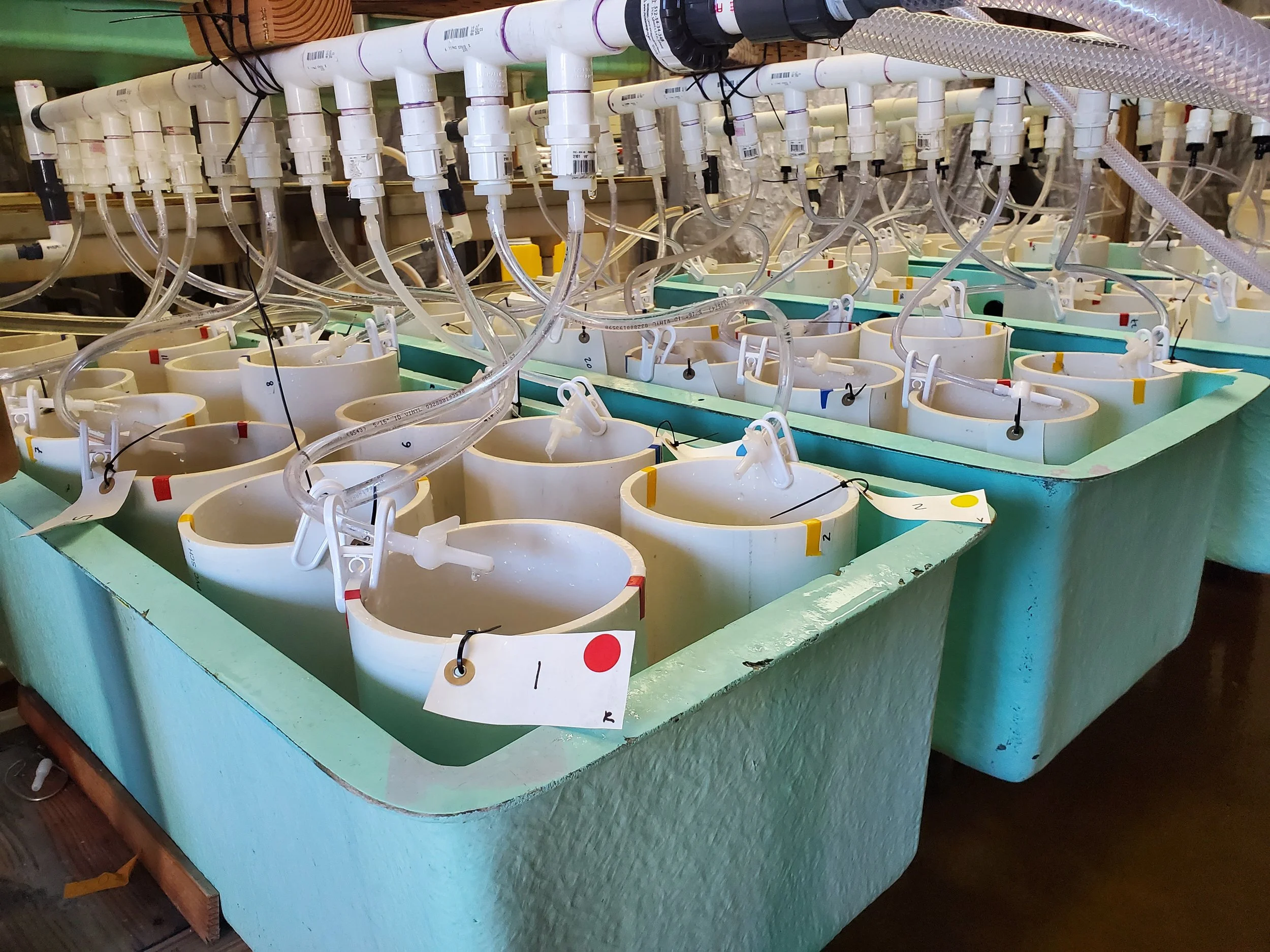
The Gurr Lab functions as a small hatchery. Our spaces feature a wet and dry lab, an array of flow-through seawater systems, coastal raft, greenhouse, and outdoor holding tanks. Our experimental systems are capable of simultaneous control of seawater parameters (temperature, dissolved oxygen, pCO2, etc.) to host a breadth of projects. Key to our lab is our unique cooperation with a federal oyster breeding center, offering access to ~100 selectively bred oyster families, sterile bench space and instrumentation, quarantined effluent, and bulk algae monocultures.
How can I join the lab?
Check the Join the Team and News pages for details on current openings and how to apply. When positions are available, a notice will also appear in the site’s announcement bar. Please do not hesitate to contact the lab as well!
What types of projects are offered?
Each study positions mariculture enhancement at the forefront. The questions we ask and discoveries we make are routed in theorical and applied concepts. Current directions span early life programming, multi –omics, and bioenergetics, and phenomics.
Can industry partners collaborate?
Absolutely! Our ultimate goal is to scale tools for real-world applications. It is essential that the lab partners with hatcheries, farms, and agencies.